Everything You Need to Know About Attending Trade Events in Japan
Japan is home to some of Asia’s biggest and most influential trade shows, exhibitions, conferences, and business events. From technology and manufacturing to tourism, healthcare, food, and automotive industries, entertainment like games, anime, and toys, and emerging tech, trade events in Japan offer valuable opportunities to connect with Japanese companies, meet international partners, and explore new markets.
However, attending a trade event in Japan can feel different from attending one in your home country. Business etiquette, communication styles, transportation, and even the way meetings are arranged may require some preparation.
Whether you are visiting Japan for your first trade show or are a regular business traveler, understanding the available business services in Japan can make your trip considerably easier.
A quick summary of what you need to know:
| Business Service / Consideration | Why It Matters | Importance |
|---|---|---|
| Interpretation | Helps with detailed conversations and negotiations | ★★★ |
| Meeting Coordination | Makes it easier to connect with priority companies | ★★★ |
| Business Transportation | Reduces travel stress and saves time | ★★★ |
| Japanese & English Business Cards | An important part of professional introductions | ★★★ |
| Event Research | Helps you plan your time effectively | ★★★ |
| Japanese Business Etiquette | Supports positive professional relationships | ★★☆ |
| Public Transportation Planning | Helps you navigate busy cities and venues | ★★☆ |
| Flexible Scheduling | Allows for unexpected delays and additional opportunities | ★★☆ |
Business Services to Know About Before Your Trip
Planning a successful business trip involves more than simply registering for an event and booking a hotel. A range of business services can help international visitors navigate their time in Japan.
1. Interpretation and Translation Services
Source: Unsplash
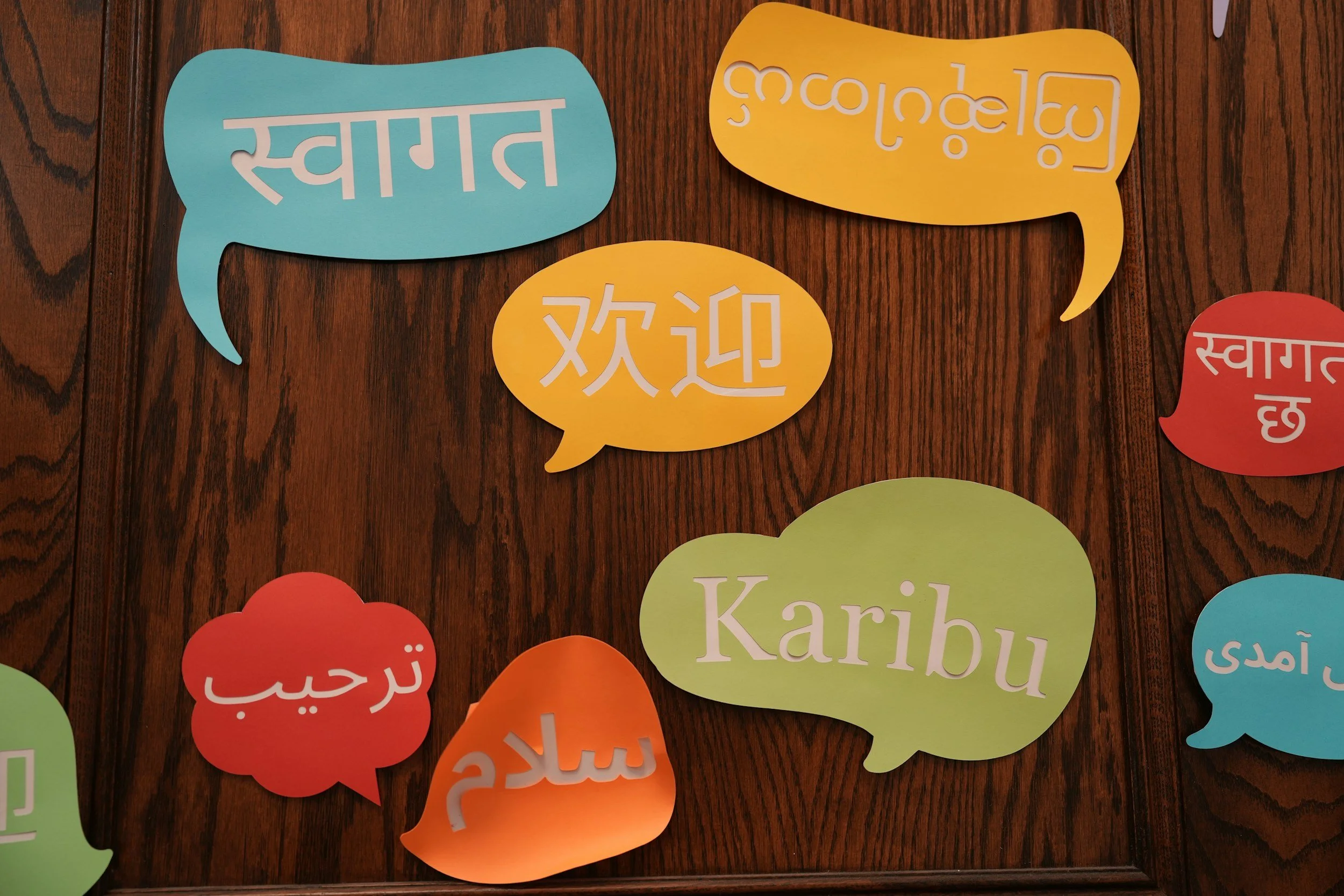
Language can be one of the biggest challenges when attending a Japanese trade event. Although English is commonly used at international exhibitions, not every exhibitor or business representative will be comfortable conducting detailed discussions in English.
Professional interpretation can be particularly useful when discussing:
Products and technical specifications
Contracts and business agreements
Pricing and purchasing
Manufacturing requirements
Partnerships and collaborations
Company introductions
For important meetings, consider arranging an interpreter in advance rather than relying entirely on English-language support at the venue.
2. Business Meeting and Appointment Support
Source: Unsplash
Japanese business culture places considerable importance on preparation and punctuality. If you are hoping to meet specific companies during a trade show, contacting them before the event can increase your chances of having a productive conversation.
If you are trying to reach out to new businesses, cold emailing in Japanese could be done. However, a referral is also very crucial in arranging business meetings in Japan, as some Japanese companies may not accept meetings from people they don’t know.
Some business support services can help with scheduling meetings, coordinating appointments, and communicating with Japanese companies before your arrival. For example, TokudAw has helped businesses in the past through phone calls, finding the person in charge, arranging a pre-meeting to convince them to meet, and mitigating strategies according to both parties' wants and needs to make the meeting happen.
One should also understand who to call and contact in a company. Contacting someone in a too junior position may result in the person not wanting to risk speaking to their senior. While contacting someone too senior might result in no answer due to them being extremely occupied.
Important Tip: Create a list of your priority companies and arrange meetings ahead of time whenever possible.
3. Business Transportation
Source: Unsplash
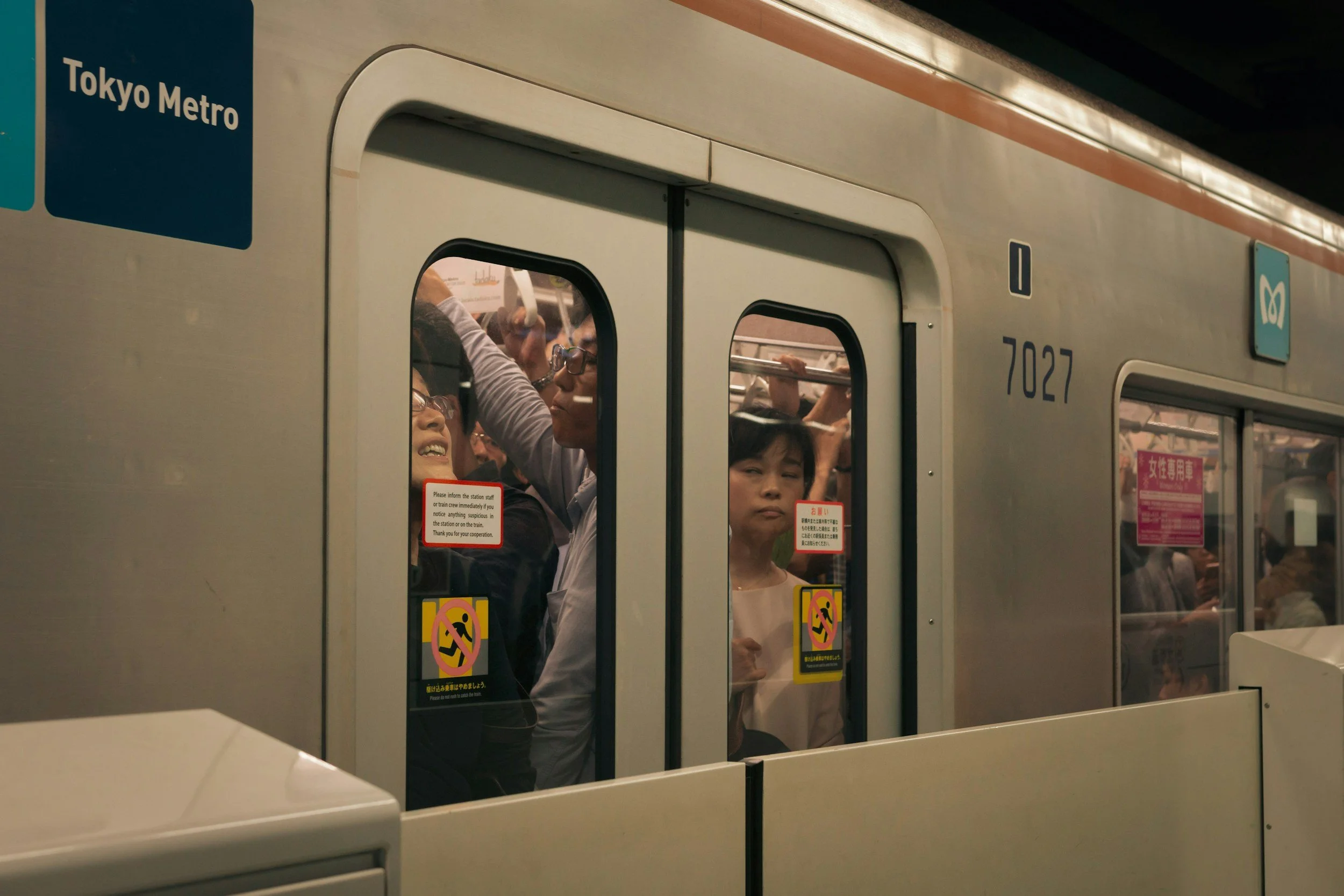
Getting to and from a large trade event can be surprisingly time-consuming and extremely confusing, particularly when the venue is outside of the city center.
Japan's public transportation network is highly developed, but large exhibitions can mean crowded trains, complicated transfers, and unfamiliar stations for first-time visitors.
Important Tip: Some train cars are also "mildly air-conditioned", to provide a comfortable environment for passengers who prefer a warmer temperature. However, some people might find this rather uncomfortable, especially in crowded train lines like the Yamanote line and in the more humid months of May-October. Accidentally hopping on the wrong train could mean you arrive at your meetings sweaty.
Business transportation services can include:
Airport transfers
Private vehicles
Chauffeur services
Group transportation
Accessible vehicles (this would typically be the most difficult to find without a reservation)
Transportation between hotels and event venues
Transportation for business meetings outside the event
It is also important to note that hailing a taxi can be difficult in certain areas, especially after an event where there are many other people trying to hail a taxi at the same time. Some streets are also where taxis will commonly rest or start to turn off their lights. For a more relaxed corporate trip, it is best to have your driver waiting for you.
The time of day matters too. During the morning and evening commutes, right after the train stops may mean fewer taxis as everyone is trying to get a taxi to go home.
During heavy rain and typhoons, taxis can be particularly difficult. Thus, if you are traveling to Japan during the rainy season or April - June, or August-September for business, it is recommended to book transportation.
Most taxis hailed on the street in Japan also can only seat 4 people. In addition, many taxi cab drivers do not speak much English, and some can struggle with reading the kanji directions on map applications. It is better to have the destination written out in Japanese or pre-arrange transportation ahead of time to avoid conditions on the moment of.
Getting the Chōme-banchi-gō (丁目・番地・号) or numbers of an address right is critical, as the first number wrong can send you across the neighborhood, the second on a different street. The third would just be a slightly different building in most cases.
For groups carrying exhibition materials that are big and bulky, such as samples or equipment, arranging appropriate transportation in advance can also make the journey much more convenient. TokudAw provides a HIACE van that is spacious which would make the journey more comfortable.
4. Understanding Japanese Business Etiquette

Source: Unsplash
Knowing a few basic aspects of Japanese business etiquette can help you make a positive first impression.
Business Meeting
Arriving on time is important in Japanese business settings. If you have a scheduled meeting, aim to arrive a little early, especially if you are unfamiliar with the venue.
Some buildings have a receptionist, so be sure to let them know your name, who you are meeting, and your appointment schedule.
Large exhibition centers can take time to navigate, so give yourself extra time to find registration areas, exhibition halls, meeting rooms, and specific booths.
In a meeting, make sure that the most important person in the group sits in the middle of the table, facing the most important person in the other business's group. Whoever is the client should also sit at the side of the table facing the "entrance" to the room, and the business doing the selling should sit with their backs to the door on one side.
Dress is typically more conservative and more formal than in other countries. For women-oriented styling, business-casual "Banana Republic" style clothing usually will do. Avoid V-neck shirts, skirts above the knees, and short-sleeve tops.
For male-oriented styling, a button-down shirt and blazer are recommended for the first meeting. Practical shoes are acceptable; however, sneakers are not recommended. Many people carry a backpack or a briefcase.
Some professionals will use laptops, tablets, or paper & pen in meetings. There is no standard; it varies by the individual.
Business Cards
Also known as meishi (名刺), remain an important part of professional interactions in Japan.
When exchanging cards, present yours with both hands, with the information facing the recipient. When receiving a card, take a moment to look at it rather than immediately putting it away. One needs to think of it as receiving a gift from someone. Acknowledge their name or title.
Your card needs to have your name in Japanese (if it is not a Japanese name, you can write it in katakana) and English, your email, your job title, your company, the company’s address, phone number, and website.
Important Tip: If you receive several cards during a busy exhibition, avoid placing them carelessly in your pocket. Keeping them organized can help you remember who you met after the event.
Business Communication
Japanese business communication can sometimes be more indirect than communication styles in other countries. Building trust and relationships may be just as important as discussing the immediate business opportunity.
Asking for feedback right away is often not well received. Also keep in mind that often there are other people who need to participate in the decision-making that may not have been in the meeting. It is usually good to think about an initial meeting as the first of many before any sales would happen.
Small talk topics that you can touch upon:
Weather and the seasons
Baseball
Food
Avoid:
Family and personal topics
Politics and religion
Topics that could appear like bragging
Being polite, patient, and respectful can go a long way.
Remember to speak slowly, somewhat softly, and gently, and avoid metaphorical or colorful language.
You do not need to become an expert in Japanese business culture before attending an event, but understanding some basic expectations can help you feel more comfortable.
Preparing for a Trade Event in Japan
A little preparation can make a significant difference! Before leaving for Japan, consider preparing:
Your business card.
Your company information (can be in a form of printed out brochure or digital presentation).
Your meeting schedule, if any.
Your transportation plan.
Your communication tools.
Comfortable business attire.
A giveaway item (a Kleenex pack is a common item for businesses).
What to Expect at Japanese Trade Events
Japanese trade events can be large and highly organized. Depending on the industry, you may find exhibition booths, product demonstrations, seminars, networking events, business-matching programs, and scheduled meetings.
Often, you need a physical printout of the QR code for the entry badge to make the check-in process go more smoothly. A photo will not do; it typically needs to be a printout.
It is worth checking the event's official website before attending. Look for information about registration, venue access, opening hours, transportation, conference schedules, and business-matching opportunities.
If the event provides an exhibitor directory, review it before arriving and identify the companies you most want to visit.
This can help you avoid spending the entire day wandering between booths without a clear plan.
How to Make the Most of Your Trip
If your schedule allows, consider arranging meetings with companies, suppliers, distributors, or potential partners outside the exhibition itself. You may also want to allow time for networking events or industry-related seminars. As with events in other parts of the world, one can expect side events sponsored by partner companies. The event website, Meet-up, and Luma are good places to look for the side events.
For international visitors, combining a trade event with additional business meetings, especially site visits to stores for competitive or market auditing, touring partner factories, or even understanding the Japanese buyer a bit more by visiting local stores, can make the trip more valuable and help you gain a broader understanding of the Japanese market.
Just remember to leave some flexibility in your schedule. Japanese cities can be busy, and meetings or transportation may take longer than expected.
Important Tip: Approach any event with an open mind. Japanese business relationships often develop through trust and continued communication. Bringing a gift from your home country could also really extend the hospitality towards the host. Often, a part of building a relationship in Japan is spent over a meal, a bit of culture. Business meals are often multi-course meals called Kaiseki meals.
FAQs
Do I have to speak Japanese to attend trade events in Japan? Not necessarily. Many major international trade events provide English-language information and attract exhibitors who can communicate in English. However, professional interpretation can be helpful for technical or detailed business discussions.
Is public transportation suitable for business travelers in Japan? Yes. Japan has an extensive public transportation network, particularly in major cities. However, large exhibition venues can involve significant walking and crowded transportation, so private business transportation may be useful for groups, equipment, or tightly scheduled itineraries. The Shinkansen has a new form of transportation for business meetings. It is a meeting room that is reserved on the train. TokudAw can help!
Do people in Japan use LinkedIn? LinkedIn is used by some professionals, but isn't as widely used by Japanese professionals. It is popular with the international community, and it is possible that senior people at global companies will have a profile. Often, people making sales decisions may not, as privacy is highly valued and many people do not want to be contacted or solicited online. Additionally, people may perceive a profile on LinkedIn as an act of disloyalty to their employer, so they may have a profile, but it may not be their full name.
Plan a Business Trip with TokudAw
TokudAw specializes in intuitive travel designed for all types of people, including businessmen and women alike. Travel is centered around you and private vehicles, with custom daily pacing that suits your needs. We focus on the details that matter: friendly transport, predictable transitions, and communication that works for you. With TokudAw, you are the one making decisions as we curate an experience that you will never forget.
