What kind of digital detox has Japan to offer to Tech professionals?

Source: Unsplash
Being always “on” and the road to exhaustion
If you are a professional working in tech, or a team on a business trip, you are probably expected to remain permanently connected and responsive. Not to mention the growing demands of AI to improve efficiency and capacity for output far beyond previous capacity. As product cycles accelerate and new AI tools flourish everyday, even taking a break and resting can become like another task that needs optimization.
Your problem may not be technology itself but forgetting how to distance yourself from it could be. Even on holiday, it is hard to set boundaries and know when to put your device away. Japan is a destination that is very tech friendly and practical, especially when visitors can get lost in culture and language easily.
However, Japan is also a country where it can be easy to take a moment to step away from technology and enjoy a pause that is not filled with notifications, messages, metrics, and constant stimulation. Learn more about TokudAw’s approach to slow travel.
For teams, stepping away from constant notifications and stimulations may seem unrealistic, yet a shukubō (Japanese temple stay), or one of TokudAw’s treasure session at a temple offer a practical setting for a short term retreat.The retreat or activities gives you and your team a simpler rhythm, communal activities, and time to reconnect away from the screens.
Rather than disconnecting from everything, it creates a space for a different kind of connection grounded in reflection,meditation, and a calming environment. For technology professionals, this idea may sound unrealistic but shukubō, a temple stay in Japan, is an easy way to briefly escape in an environment with fewer inputs, no decisions, and another kind of experience with connectivity that is not tech related.
Experiencing shukubō as a digital detox can give you the opportunity to explore yourself as you experience different activities such as
| What to do during shukubō or Temple-related Treasure Sessions | Why it matters |
|---|---|
| Device-free temple stay |
Reset your space and rest for real Recenter your focus on deeper thinking and longer attention spans |
| Zazen meditation |
Learn how to take a moment free of expectations and reconnect to your body Learn how to process your emotions and reconnect with your sensations as they are happening |
| Calligraphy Writing | Reconfigure your patience, your capacity to concentrate and to catch details |
| Shojin-ryōri (Temple food) | Appreciate a mindful meal and its delicate flavors. Integrate how mindfulness to food can help nourish your body for the task at hand |
| Nature and Silence | Restore your attention and make space for the present by stepping away from urban and digital noise through forest bathing—a mindful immersion in nature associated with measurable well-being benefits. |
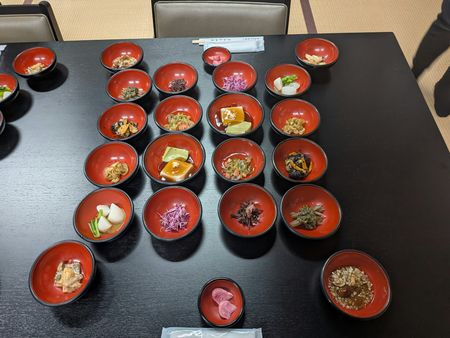
Temple food
What is a temple stay?
Japan is home to two main religious practices: Shintō and Buddhism. It is not rare for Japanese to engage on a daily basis with both. Shukubō mainly happens in Buddhist temples and allows visitors to temporarily experience another rhythm of life.
Various temples offer a variety of experiences, and by selecting the appropriate temple for your team’s needs and for the time you have, you will be able to give yourself the opportunity to go beyond a simple digital detox. To make the choice of shukubō for your digital detox is choosing wellbeing first and finding a way to reconnect while discovering a dimension of Japanese culture that is often limited to observing from the outside without understanding it properly.
Why is Shukubō relevant for Tech professionals?
Not all temples offer the option of handing over your digital devices at the check-in, but all can give you a structured period of time in which your teams can reconsider their relationship to themselves, their environment, and the balance between the attention and focus really given to their thoughts.
Indeed, a stay at a temple is not an escape from thinking but rather a chance to change the mindset and the conditions in which thinking happens. The Buddhist school of Zen is not a set of practices that promise instant transformation nor a substitute for medical or mental-health support. It requires your team to be able to focus on one thing at a time and rediscover ways to be in the present between control and mindfulness.
Whether it is through a traditional temple meal, sitting in silence and practicing Zazen (Zen Buddhist seated meditation), or focusing on Sutra copying (or calligraphy writing), the principle is not to reject technology, AI, or your sense of ambition. It is a way to learn how to reinstate sufficient distance to be able to return to them with greater intention, while learning from the cultural, philosophical, and religious teaching shukubō have to offer.
How long does a temple stay need to be efficient?
After a few hours without our phones ringing and vibrating, one can already feel a certain sense of ease. A carefully planned temple stay can offer an adapted transition between periods of intense work and constant stimulation. One night may provide a sufficient pause. Several days can amplify the sense of change in your rhythm. For professionals constantly connected to colleagues, clients, users, and systems, whatever the time available, temple stay will be part of a temporary suspension in time and space.
Efficiency is not related to time but rather to the intention you have. The experience can be private or combined with guided reflection, nature walks, and cultural learning as well as planning support for your team’s return to work. Shukubō does not require immediacy, anticipation or improvement because it simply asks to be present and allows you to reconsider how to spend your attention and energy. The goal is not simply to remove phones and computers but rather to support the creation of an environment in which perspective can be restored.
What can TokudAw do?
TokudAw can arrange a self-paced digital detox itinerary for technology professionals, teams, or anyone experiencing the pressure and feeling exhaustion from constant connectivity. This may include guidance with transportation, finding the right temple where to stay, interpretation, and selecting the right activities. You can learn more on other digital detox options in our article about Digital Detox in Japan.
Some temples are flexible in their programming and TokudAw works with the staff to craft a program right for your organizations' needs.
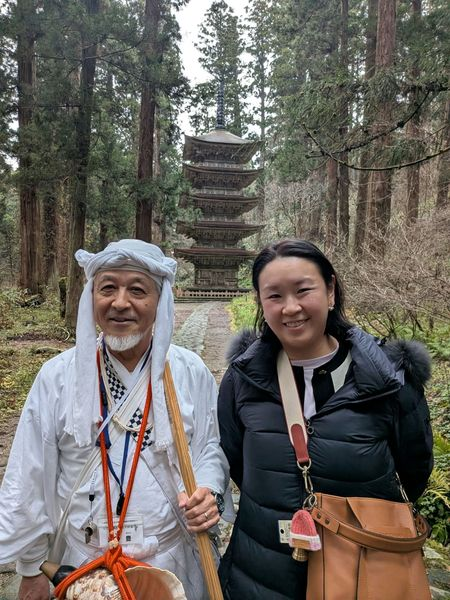
TokudAw’s CEO with a Buddhist monk specialized in Mountain practice
FAQ
Does our organization need to be Buddhist?
No. Unlike western settings where religion may be kept separate from professional life, Japanese temples can also serve as community and cultural spaces. Teams of any faith,or none, can join a temple stay as a respectful cultural experience, with practices such as meditation.
Can I stay connected in case of an emergency?
TokudAw can discuss emergency arrangements in advance and can adapt the design of the experience depending on the temples’ conditions.
What team-building experiences in Japan suit corporate groups?
Temple stays, zazen, forest bathing, and cultural workshops can support team reflection, morale, focus, and shared connection away from daily routines.
Can meditative experiences in Japan support team resilience and attention?
Yes. A slower shared rhythm, time in nature, and guided reflective activities can help teams reset after an intense period and create space for more focused conversation
Is the experience physically or mentally demanding?
Not necessarily. Meditation, meals, sutra copying (think of it as calligraphy writing), or nature activities should be adapted to your abilities. The goal is to develop space for you to rest and recharge rather than to emphasize your fatigue.
How long should a digital detox at a temple last?
Time can affect the depth of the experience and there is no correct amount of time. A one-night stay can offer you a clear pause and the chance to experience temple food, while two or more nights may allow you to experience different Zen practices and settle into a slower rhythm. TokudAw can adapt the length to your schedule and objectives.
What happens after a digital detox at a temple?
The aim is not to give up on technology but to return to it with a better sense of boundaries. It may allow you to get back to work with more intention and a greater distance to identify digital habits and reflect on your expectations.
